What Is Deep Drawing?
Deep drawing (in the context of sheet metal forming) is the process of transforming a steel plate into a deep (often complex) shape, whereby the plate is "pulled in" from the edge and "drawn in" to create a deep shape that might not otherwise be possible using common metal forming techniques.
One of the most popular metal forming methods available to manufacturers is deep drawing. Deep drawing starts with a flat piece of metal, called a blank or disc. The blank is placed over a cavity, called a die.
The simplest example of "deep drawing" is the basic round cup. The physics of metal forming in this simple shape are easy to understand because the cup is defined by only a few key dimensions, such as diameter and depth. The thickness of the sheet is also a consideration. Deep round cups can be easily drawn from a round blank by considering the ratio of the diameter of the blank to the diameter of the cup to be drawn. It was probably established more than a century ago that the ratio of blank/cup diameter controls the ability to successfully draw a cup shape from sheet steel.
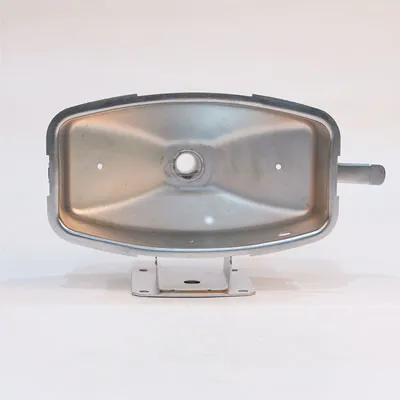
Deep Drawing Parts
However, no such table can achieve successful sheet metal forming results for any product shape that is not a simple round cup. More complex shapes cannot be drawn visually using simple methods or rules of thumb. With improvements in computer-aided design (CAD), unimaginable shapes can be designed to meet modern performance and shaping requirements, so modern techniques are needed to figure out how to deep-draw complex sheet metal shapes.
The goal of most modern deep-drawn parts is to completely draw the entire shape in one stage. Where this is not possible, due to the limitations of forming, the main shape can be deep drawn and then additional stages are used to complete the remaining features that could not be achieved in the main drawing stage.
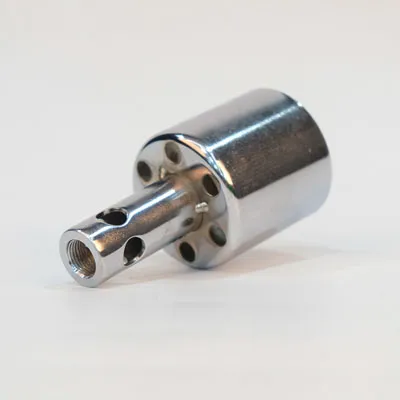
Custom Precision Deep Drawing Parts
It is less common to have multiple redraw stages to achieve complex 3D product shapes, however, this may still be necessary. The reason a simple cup shape can be pulled to almost any depth is because the edges of the blank can easily be "pulled in" almost infinitely. However, when the product shape becomes more complex, the edges of the blank may not be able to "pull in" freely because the geometry causes the material to flow together and stop the stretching process, and then start stretching instead of drawing.
When the blank stops pulling in (i.e.: stretching), the sheet metal material is forced to stretch, which then quickly leads to local necking and failure (splitting). Thus, a well-designed deep drawing process will allow for a deeper product shape than stretching alone.
Most complex deep drawing processes also include some amount of stretching, rather than 100% pure stretching. Once the forming pattern is a mixture of stretching and drawing, computer simulations are needed to properly design and predict the results of the proposed deep drawing process.
If you have any questions about deep drawing and its processes, please contact us today.